
ADAUSD
Cardano - US dollar
0.17400
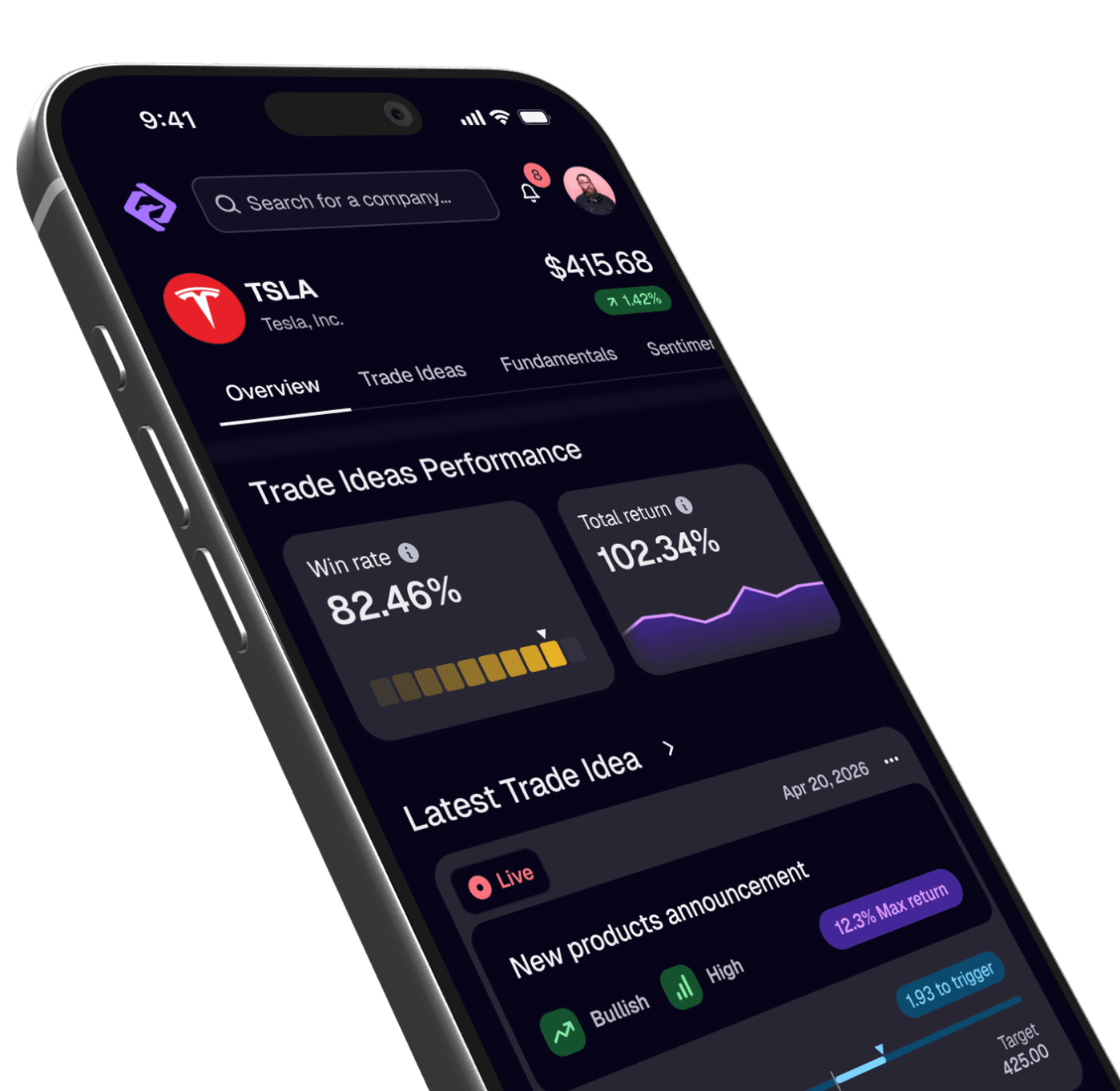
0.08%Trade Ideas Performance
Latest Closed Trade Idea
0.17400
0.08%About
Overview
What Is ADA/USD?
ADA/USD shows the ADA/USD price: how many US dollars are needed to buy one ADA, the native token of Cardano. If ADA/USD trades at a hypothetical 0.50, one ADA costs 50 US cents, and converting Cardano to USD works at the same rate.
Cardano is a smart contract platform (Layer 1) known for its research-driven approach: major protocol changes are based on peer-reviewed academic work and introduced in planned stages. Traders follow ADA/USD because of Cardano's large, loyal community, its widely used staking system and its move to on-chain governance controlled by ADA holders.
Key Facts About ADA/USD
- Base currency: Cardano (ADA)
- Quote currency: US Dollar (USD)
- Asset category: Smart contract platform (Layer 1)
- Blockchain / network: Cardano's own blockchain
- Consensus mechanism: Proof of Stake, using the Ouroboros protocol
- Launch year and founders: Launched in 2017; led by Charles Hoskinson, a co-founder of Ethereum, and developed by Input Output, the Cardano Foundation and EMURGO
- Supply model: Maximum supply of 45 billion ADA, with remaining tokens released gradually from a reserve as staking rewards
- Market capitalization tier: Large-cap
- Trading hours: 24/7
- Liquidity: High, with listings on almost all major exchanges
- Volatility: High; generally above Bitcoin's
How Cardano Works
Cardano is secured by Ouroboros, a Proof of Stake protocol developed through academic research. Blocks are produced by stake pools, run by independent operators. ADA holders delegate their tokens to a pool of their choice to share in its rewards, without handing over control of their coins.
Cardano uses an extended UTXO model, a design similar to Bitcoin's way of tracking coins but extended to support smart contracts. This makes transaction outcomes more predictable before they are submitted, though it requires developers to think differently than on Ethereum. Smart contracts, written with the Plutus platform, became available with the Alonzo upgrade in September 2021.
Development follows a roadmap of named "eras". The Chang hard fork in September 2024 began the Voltaire era, introducing on-chain governance in which ADA holders, delegated representatives, stake pool operators and a constitutional committee take part in decisions, including how the treasury is used. Compared with Ethereum and Solana, Cardano moves more slowly but places a strong emphasis on formal methods and decentralized governance.
Cardano Tokenomics and Supply
ADA's maximum supply is 45 billion. Most ADA was distributed in a token sale before launch, with allocations to the organizations that build Cardano. The remainder is held in a reserve and released gradually to pay staking rewards and fund the treasury.
Because the reserve shrinks over time, new issuance declines each year, and transaction fees are expected to make up a larger share of rewards in the long run. There are no halvings, burns or unlock cliffs.
ADA is used to pay fees, to delegate to stake pools and to vote in governance. Staked ADA is not locked, and there is no slashing, so holders can move or sell it at any time. For ADA/USD, the supply model matters because new supply is predictable and declining, while staking participation and treasury decisions influence how much ADA reaches the market.
Key Drivers of ADA/USD
DeFi and Developer Activity
Cardano has often been criticized for a smaller DeFi ecosystem than rivals. Growth in on-chain activity, stablecoin use and new applications is a central focus of ADA/USD analysis, because it shows whether Cardano can turn its technology into real demand.
Governance and Treasury Decisions
Under on-chain governance, ADA holders decide how the large Cardano treasury is spent. Well-received proposals can support confidence, while disputes or wasteful spending can weigh on the token.
Major Upgrades
Cardano's roadmap upgrades, such as improvements to throughput and Layer 2 solutions, are widely anticipated and can move the price before and after they go live.
Investment Products and Regulation
Exchange-traded products tracking ADA and clearer US rules for proof-of-stake tokens can widen access for institutional investors.
Community and Founder Visibility
Cardano has one of crypto's most active communities, and statements by its founder often draw strong attention. Sentiment can therefore shift quickly on announcements.
Typical ADA/USD Volatility and Price Ranges
ADA/USD often moves in the mid single digits in percentage terms on an average day, with weekly ranges commonly between 8% and 20%. It tends to move more than Bitcoin, with strong rallies during altcoin seasons and long declines in bear markets.
Volatility tends to rise around major hard forks, governance votes, investment product news and broad crypto events such as FOMC decisions and US CPI releases. Quieter periods are common between roadmap milestones, when ADA often trades in wide ranges.
ADA is generally more volatile than Bitcoin and far more volatile than traditional assets.
Best Time to Trade ADA/USD
ADA/USD trades 24/7, including weekends:
- Asian session: active, with strong historical interest from Japanese and Korean investors
- European session: volume rises as European traders join
- US session: usually the busiest, especially during the overlap with US equity market hours
- Session overlaps: the Europe-US overlap typically offers the deepest liquidity
- Weekends and holidays: thinner liquidity can magnify moves
The US session is generally the best time to trade ADA/USD, when liquidity and macro news flow are highest.
Most Common Strategies for Trading ADA/USD
- Delegation while holding: because staked ADA stays liquid and is not slashed, many holders delegate to a stake pool and earn rewards while keeping full flexibility to trade.
- Hard-fork event trading: Cardano's named upgrades are announced well in advance, giving traders known dates to position around.
- Range trading: ADA has spent long periods in broad sideways ranges, suiting traders who buy near support and sell near resistance.
- Altcoin-cycle rotation: ADA often outperforms when capital rotates into large-cap altcoins, so traders watch Bitcoin dominance for timing.
Those who want to buy Cardano often delegate it, while active ADA/USD trading follows upgrades, governance and altcoin cycles.
Factors That Could Move ADA/USD in the Future
- Regulation: classification of proof-of-stake tokens and access to investment products
- Adoption: growth of DeFi, stablecoins and real-world projects on Cardano
- Technology: scaling upgrades and Layer 2 solutions
- Competition: Ethereum, Solana and other smart contract platforms
- Monetary policy: liquidity conditions that drive demand for altcoins
- Tokenomics: declining reserve issuance and treasury spending
- Governance: how effectively on-chain governance manages the network
No ADA/USD forecast or ADA/USD price prediction is certain; traders follow adoption, upgrades and governance as they develop.
Advantages and Risks of Trading ADA/USD
Advantages
- Capped supply: a maximum of 45 billion ADA
- Flexible staking: no lock-up and no slashing
- On-chain governance: holders vote on key decisions
- High liquidity: widely traded on major exchanges
Risks
- Slower ecosystem growth: DeFi activity has lagged rivals
- Delivery risk: roadmap upgrades can take longer than expected
- Governance disputes: treasury decisions can divide the community
- High volatility: large swings in both directions
ADA/USD Trading FAQ
Q: Does staking ADA lock my tokens?
A: No. Delegated ADA stays in your wallet and can be moved or sold at any time, and Cardano does not slash delegators.
Q: What is the extended UTXO model?
A: It is Cardano's way of recording balances, based on Bitcoin's model but extended to support smart contracts, which makes transaction results more predictable.
Q: What did the Chang hard fork change?
A: Activated in September 2024, it introduced on-chain governance, allowing ADA holders and their representatives to vote on protocol changes and treasury spending.
Q: Is there a maximum supply of ADA?
A: Yes. ADA is capped at 45 billion tokens, with the remaining supply released gradually from a reserve.
FAQ
Related Assets
Price action provided by Massive. Fundamentals, news and corporate events provided by FactSet. NLP support provided by Perplexity & Gemini. All data is provided for informational purposes only.
Make every trade make sense.
Sign up free. No card required. Three trade ideas a day, the AI analyst, the community - on us.

Join us and trade with people
who think like you.
The Edge Hound Discord is where serious self-directed investors talk strategy, share setups, and learn from each other. Free to join with any plan - including Free.
Free to join with any plan - including Free.