
AVAXUSD
Avalanche - US dollar
8.4890
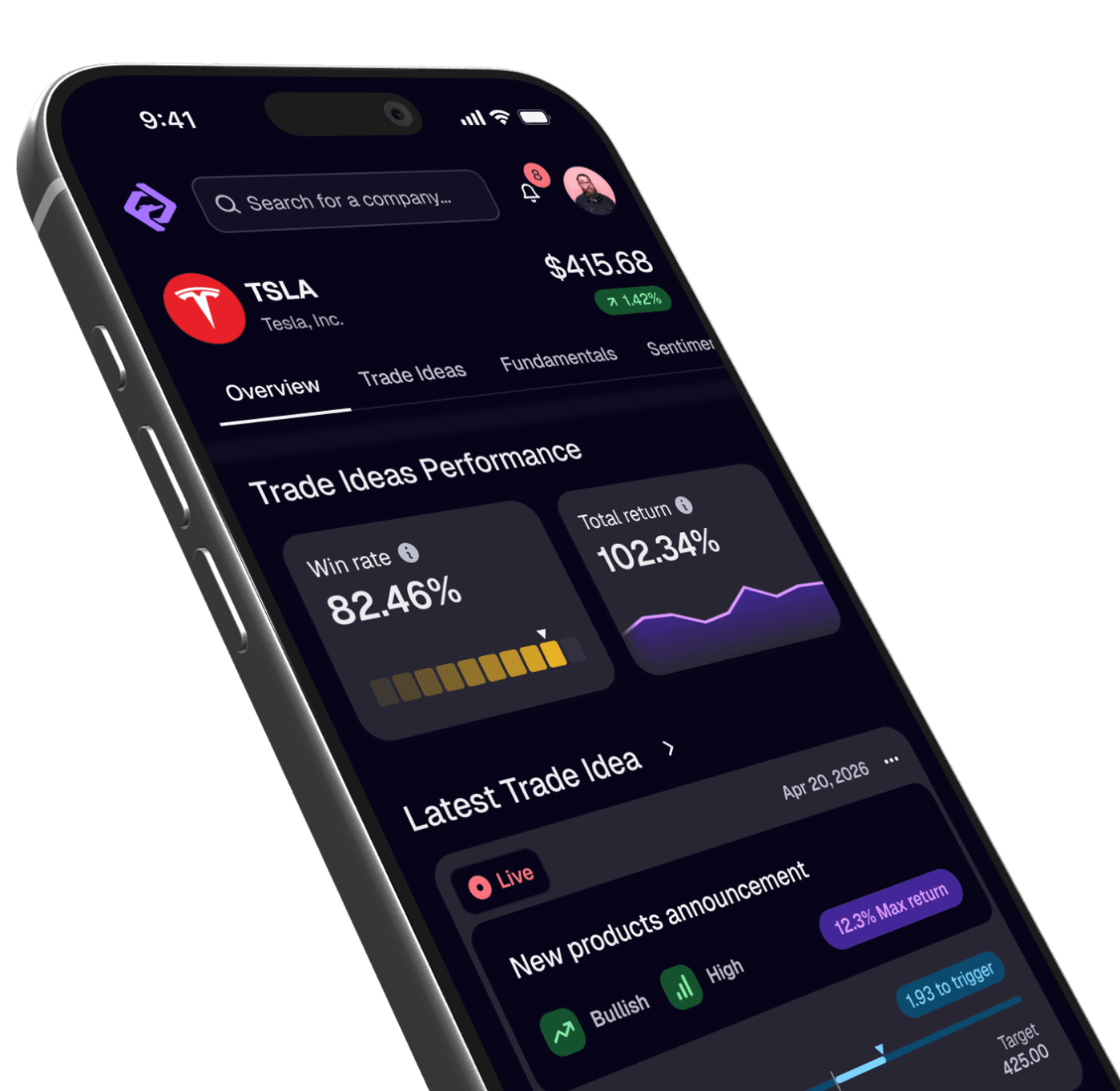
1.46%Trade Ideas Performance
Latest Closed Trade Idea
8.4890
1.46%About
Overview
What Is AVAX/USD?
AVAX/USD shows the AVAX/USD price: how many US dollars are needed to buy one AVAX, the native token of Avalanche. If AVAX/USD trades at a hypothetical 25, one AVAX costs 25 US dollars, and converting Avalanche to USD works at the same rate.
Avalanche is a smart contract platform (Layer 1) designed for fast finality and for letting organizations launch their own customized blockchains, called Avalanche L1s. Traders follow AVAX/USD because Avalanche competes for DeFi, gaming and institutional tokenization projects, and because AVAX has a capped supply with fees that are permanently burned.
Key Facts About AVAX/USD
- Base currency: Avalanche (AVAX)
- Quote currency: US Dollar (USD)
- Asset category: Smart contract platform (Layer 1)
- Blockchain / network: The Avalanche Primary Network, made up of the X-Chain, P-Chain and C-Chain, plus independent Avalanche L1s
- Consensus mechanism: Proof of Stake, using the Avalanche family of consensus protocols
- Launch year and founder: Developed by Ava Labs, led by Emin Gün Sirer; the mainnet launched in 2020
- Supply model: Maximum supply of 720 million AVAX; staking rewards add new tokens while all transaction fees are burned
- Market capitalization tier: Large-cap
- Trading hours: 24/7
- Liquidity: High, with listings on most major exchanges
- Volatility: High; generally above Bitcoin and Ethereum
How Avalanche Works
Avalanche's consensus works by repeated random sampling: validators ask small, random groups of other validators which transaction they prefer, and repeat the process until the network settles on an answer. This allows transactions to become final in about a second while supporting a large number of validators.
The Primary Network has three chains. The C-Chain runs Ethereum-compatible smart contracts and hosts most DeFi activity. The P-Chain coordinates validators and Avalanche L1s, and the X-Chain handles fast asset transfers. Validators of the Primary Network must stake at least 2,000 AVAX.
Avalanche's distinctive feature is Avalanche L1s, previously called subnets: separate blockchains with their own rules, validators and fees, used for games, enterprise applications and tokenized finance. The Avalanche9000 upgrade, also known as Etna, went live in December 2024. It removed the need for L1 validators to stake 2,000 AVAX, replacing it with a small ongoing fee paid in AVAX, and cut fees on the C-Chain. Compared with Ethereum's rollups, Avalanche L1s are fully independent chains; compared with Solana, Avalanche spreads activity across many networks.
Avalanche Tokenomics and Supply
AVAX has a maximum supply of 720 million tokens. About half was allocated at launch to the token sale, team, foundation and partners, with vesting schedules for insiders. The rest is reserved for staking rewards, released over time.
All transaction fees on Avalanche are burned, permanently removing AVAX from supply. When network activity is high, the burn offsets more of the new issuance from staking rewards. Since Avalanche9000, L1 validators also pay continuous fees in AVAX.
AVAX is used for fees, staking and paying for Avalanche L1 validation. For AVAX/USD, the supply model matters because the cap limits total issuance, while the balance between staking rewards and fee burns determines whether circulating supply grows quickly or slowly.
Key Drivers of AVAX/USD
Avalanche L1 Launches
New L1s for games, finance and enterprises show whether Avalanche's multi-chain strategy is working. Since L1 validators now pay fees in AVAX, more L1s can add token demand, making L1 growth central to AVAX/USD analysis.
Institutional Tokenization
Avalanche has been used by financial firms to issue tokenized funds and other real-world assets. New institutional deployments support its credibility.
C-Chain DeFi Activity
Activity on the C-Chain drives fee burns. Growth in DeFi and stablecoin use on Avalanche supports the token.
Network Upgrades
Major upgrades such as Avalanche9000 change costs for builders and can shift sentiment around their launch.
Altcoin Market Cycles
As a large-cap Layer 1, AVAX tends to rise strongly in altcoin rallies and fall sharply in downturns.
Typical AVAX/USD Volatility and Price Ranges
AVAX/USD often moves in the mid single digits in percentage terms on an average day, with weekly ranges commonly between 10% and 25%. It has historically posted large gains in bull markets and deep drawdowns in bear markets.
Volatility tends to rise around major upgrades, institutional announcements, large token unlocks in earlier years and broad crypto events such as FOMC decisions and US CPI releases. Quieter periods are common when altcoin interest fades and activity on the C-Chain slows, which also reduces the amount of AVAX burned.
AVAX is generally more volatile than Bitcoin and Ethereum and far more volatile than traditional assets.
Best Time to Trade AVAX/USD
AVAX/USD trades 24/7, including weekends:
- Asian session: active, with steady volume on Asian exchanges
- European session: volume rises as European traders join
- US session: usually the busiest, as Ava Labs is US-based and US macro news and the overlap with US equity market hours drive the market
- Session overlaps: the Europe-US overlap typically offers the deepest liquidity
- Weekends and holidays: thinner liquidity can magnify moves
The US session is generally the best time to trade AVAX/USD, since most Avalanche announcements and institutional news arrive during US hours.
Most Common Strategies for Trading AVAX/USD
- Ecosystem-catalyst trading: traders position around announcements of new L1s and institutional partnerships, which can trigger sharp moves.
- Fee-burn tracking: monitoring burned AVAX and C-Chain activity helps traders judge whether network demand is growing.
- Staking: long-term holders delegate AVAX to validators to earn rewards, offsetting new issuance.
- Breakout trading: AVAX's long consolidation periods followed by fast moves suit traders waiting for confirmed breaks of key levels.
Those who want to buy Avalanche for the long term often stake it, while active AVAX/USD trading follows ecosystem news and altcoin cycles.
Factors That Could Move AVAX/USD in the Future
- Regulation: rules for tokenized assets and proof-of-stake tokens
- Institutional adoption: financial firms and enterprises launching L1s and tokenized products
- Technology: further upgrades to L1 tooling and network performance
- Competition: Ethereum rollups, Solana and other platforms targeting the same builders
- Monetary policy: liquidity conditions that drive demand for altcoins
- Tokenomics: staking issuance versus fee burns
- Security: bridge and smart contract risks across the ecosystem
No AVAX/USD forecast or AVAX/USD price prediction is certain; traders follow L1 growth, institutional use and market cycles as they evolve.
Advantages and Risks of Trading AVAX/USD
Advantages
- Capped supply: a maximum of 720 million AVAX
- Fee burn: every transaction fee is destroyed
- Fast finality: transactions settle in about a second
- Custom chains: organizations can launch their own L1s
Risks
- Fragmented activity: usage spread across L1s can be hard to measure
- Competition: many platforms target the same developers
- Ongoing issuance: staking rewards add new tokens
- High volatility: large swings in both directions
AVAX/USD Trading FAQ
Q: What is an Avalanche L1?
A: It is an independent blockchain built with Avalanche technology, with its own rules and validators. These networks were previously called subnets.
Q: What did the Avalanche9000 upgrade change?
A: Activated in December 2024, it removed the 2,000 AVAX staking requirement for L1 validators, replacing it with a small ongoing fee, and lowered C-Chain fees.
Q: Is AVAX deflationary?
A: Not always. All fees are burned, but staking rewards add new tokens, so the net effect depends on network activity.
Q: What is the C-Chain?
A: It is Avalanche's Ethereum-compatible chain, where most DeFi applications and tokens operate.
Q: How much AVAX is needed to validate the Primary Network?
A: Validators of Avalanche's Primary Network must stake at least 2,000 AVAX. Holders with less can delegate their AVAX to an existing validator and share in its rewards.
FAQ
Related Assets
Price action provided by Massive. Fundamentals, news and corporate events provided by FactSet. NLP support provided by Perplexity & Gemini. All data is provided for informational purposes only.
Make every trade make sense.
Sign up free. No card required. Three trade ideas a day, the AI analyst, the community - on us.

Join us and trade with people
who think like you.
The Edge Hound Discord is where serious self-directed investors talk strategy, share setups, and learn from each other. Free to join with any plan - including Free.
Free to join with any plan - including Free.