
ETCUSD
Ethereum Classic - US dollar
6.6730
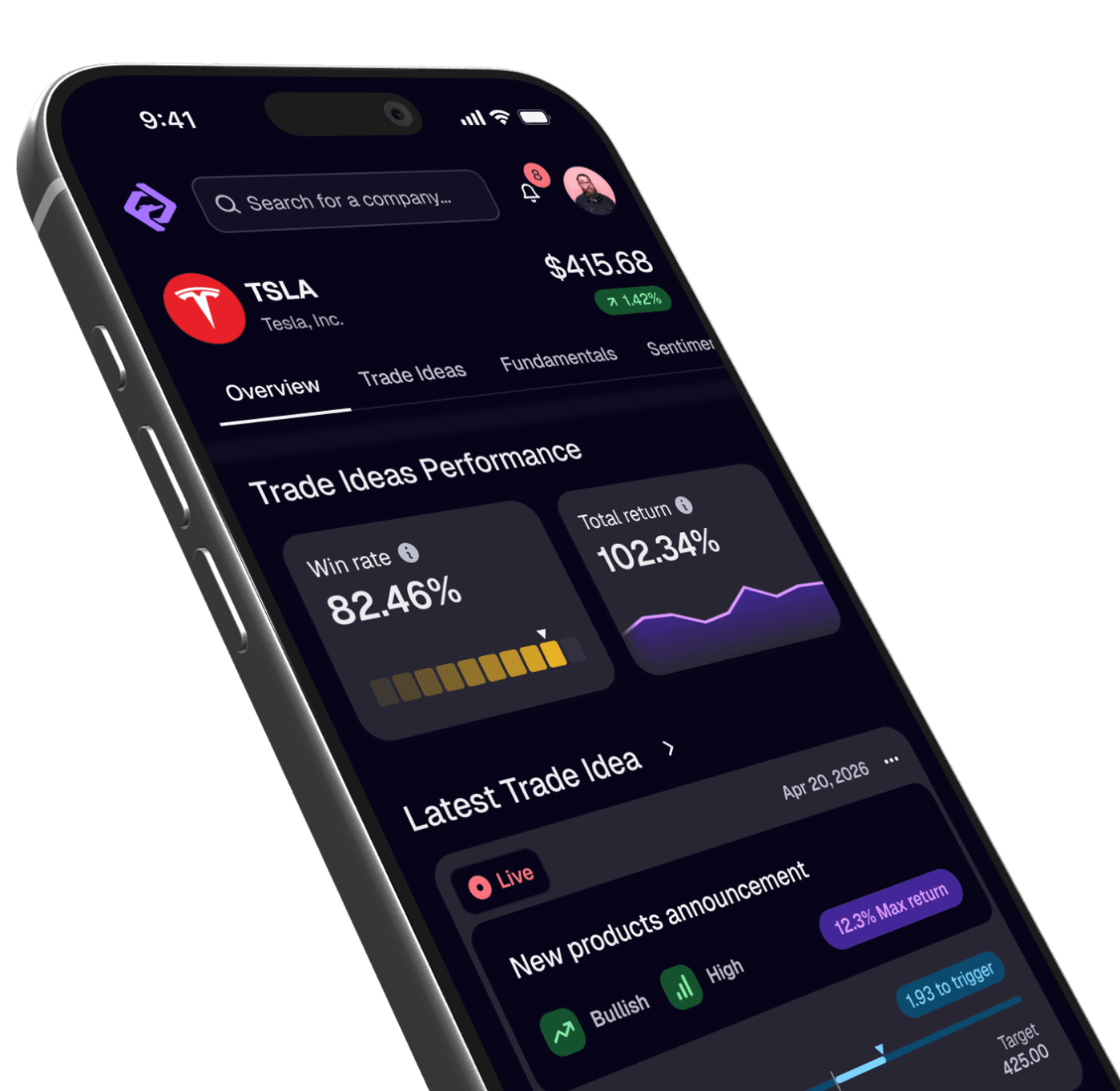
0.68%Trade Ideas Performance
Latest Closed Trade Idea
6.6730
0.68%About
Overview
What Is ETC/USD?
ETC/USD shows the ETC/USD price: how many US dollars are needed to buy one Ethereum Classic (ETC). If ETC/USD trades at a hypothetical 20, one ETC costs 20 US dollars, and converting Ethereum Classic to USD works at the same rate.
Ethereum Classic is the original Ethereum blockchain, which continued unchanged after the 2016 split that created today's Ethereum. It is a Proof of Work smart contract platform with a capped supply. Traders follow ETC/USD because it combines Ethereum-style smart contracts with Bitcoin-style mining and fixed monetary policy, and because it often moves with broader altcoin cycles.
Key Facts About ETC/USD
- Base currency: Ethereum Classic (ETC)
- Quote currency: US Dollar (USD)
- Asset category: Smart contract platform (Layer 1) using Proof of Work
- Blockchain / network: Ethereum Classic's own blockchain
- Consensus mechanism: Proof of Work, using the Etchash algorithm
- Launch year and founders: Shares Ethereum's history from its 2015 launch; became a separate chain in July 2016, when part of the community rejected the fork that reversed the DAO hack
- Supply model: Capped at about 210.7 million ETC, with block rewards cut by 20% every 5 million blocks
- Market capitalization tier: Mid-cap to large-cap, depending on market conditions
- Trading hours: 24/7
- Liquidity: High, with listings on most major exchanges
- Volatility: High; generally above Bitcoin's
How Ethereum Classic Works
In 2016, a smart contract called "The DAO" was exploited. Most of the Ethereum community supported a hard fork to reverse the theft, creating today's Ethereum. A minority rejected this on the principle that "code is law" and kept running the original chain, which became Ethereum Classic.
ETC runs the same kind of smart contracts as Ethereum, so many tools and applications are compatible. Unlike Ethereum, which moved to Proof of Stake in 2022, Ethereum Classic remains a Proof of Work network secured by miners. In 2020, the Thanos upgrade changed its mining algorithm to Etchash, allowing GPUs with less memory to keep mining.
Security has been a challenge. In August 2020, Ethereum Classic suffered three 51% attacks in one month, in which attackers with majority mining power reorganized thousands of blocks and double-spent coins. Compared with Bitcoin, ETC offers smart contracts; compared with Ethereum, it keeps mining and a fixed supply but has a much smaller ecosystem.
Ethereum Classic Tokenomics and Supply
ETC holders at the time of the 2016 split kept their coins on the original chain. New ETC is issued only as block rewards to miners. In 2017, the community adopted a monetary policy known as 5M20: the block reward is reduced by 20% every 5 million blocks, roughly every two years.
This schedule limits the total supply to about 210.7 million ETC. Supply still grows as miners receive rewards, but at a steadily slowing rate, so the cap limits inflation rather than making supply shrink. The policy was defined in ECIP-1017, an Ethereum Classic improvement proposal, and applies for as long as the network runs.
ETC is used to pay transaction fees and run smart contracts. For ETC/USD, the supply model matters because reward reductions, sometimes called "fifthenings", reduce the flow of new coins miners may sell, giving ETC a predictable long-term issuance path similar in spirit to Bitcoin's.
Key Drivers of ETC/USD
Hashrate and Network Security
Because past 51% attacks were possible due to low mining power, changes in hashrate are closely watched. Rising hashrate improves security, making it a core input to ETC/USD analysis.
Reward Reductions
Each 20% cut in block rewards reduces new supply. Traders watch these events for supply-driven moves.
Correlation With Ethereum and Altcoins
ETC often moves with Ethereum and the broader altcoin market, though with its own swings.
Proof of Work Mining Economics
ETC is one of the largest GPU-mineable smart contract networks. Changes in mining profitability across networks affect how many miners secure ETC.
Investment Products
Investment products tracking ETC give traditional investors access and can affect demand.
Typical ETC/USD Volatility and Price Ranges
ETC/USD often moves in the mid single digits in percentage terms on an average day, with weekly ranges commonly between 8% and 20%. It has a history of sudden, speculative rallies followed by long declines.
Volatility tends to rise around reward reductions, security incidents, major Ethereum events and broad crypto events such as FOMC decisions and US CPI releases. Quieter periods are common when altcoin interest fades.
ETC is generally more volatile than Bitcoin and far more volatile than traditional assets.
Best Time to Trade ETC/USD
ETC/USD trades 24/7, including weekends:
- Asian session: active, with strong interest from Asian exchanges and miners
- European session: volume rises as European traders join
- US session: busy, especially during the overlap with US equity market hours
- Session overlaps: the Asia-Europe and Europe-US overlaps bring added liquidity
- Weekends and holidays: thinner liquidity can lead to sharp moves
The Asian and US sessions are generally the best times to trade ETC/USD, when liquidity and participation are highest.
Most Common Strategies for Trading ETC/USD
- Fifthening positioning: some traders build positions ahead of scheduled block reward reductions.
- ETC/ETH ratio trading: traders compare ETC with Ethereum to judge whether the older chain is gaining or losing ground.
- Hashrate monitoring: sharp falls in hashrate are treated as warning signs, while rising hashrate supports confidence.
- Momentum trading: ETC's sudden speculative rallies suit traders who follow confirmed strength with tight risk control.
Those who want to buy Ethereum Classic should understand that ETC/USD trading often follows altcoin sentiment as much as network fundamentals.
Factors That Could Move ETC/USD in the Future
- Regulation: treatment of Proof of Work coins and investment products
- Adoption: developers and users choosing ETC for smart contracts
- Technology: network upgrades and compatibility with Ethereum tools
- Competition: Ethereum, its Layer 2s and other smart contract platforms
- Monetary policy: liquidity conditions affecting altcoins
- Tokenomics: future 20% reward reductions
- Security: resistance to further 51% attacks
No ETC/USD forecast or ETC/USD price prediction is certain; traders follow hashrate, supply events and altcoin cycles as they evolve.
Advantages and Risks of Trading ETC/USD
Advantages
- Capped supply: about 210.7 million ETC maximum
- Proof of Work: a mining-secured smart contract chain
- Ethereum compatibility: similar tools and contracts
- High liquidity: widely listed on major exchanges
Risks
- Security history: multiple 51% attacks in 2020
- Small ecosystem: far fewer applications than Ethereum
- Speculative swings: rallies are often short-lived
- Mining dependence: security depends on miner economics
ETC/USD Trading FAQ
Q: Why are there two Ethereum chains?
A: After the 2016 DAO hack, most of the community forked Ethereum to reverse the theft. Those who rejected the change continued the original chain as Ethereum Classic.
Q: What is the 5M20 policy?
A: It is Ethereum Classic's monetary policy, which cuts the block reward by 20% every 5 million blocks, limiting total supply to about 210.7 million ETC.
Q: What is a 51% attack?
A: It happens when one party controls most of a network's mining power and can rewrite recent blocks. Ethereum Classic experienced several in August 2020.
Q: Does Ethereum Classic use Proof of Stake?
A: No. Ethereum Classic remains a Proof of Work network secured by miners.
Q: What was the Thanos upgrade?
A: Activated in November 2020, Thanos changed Ethereum Classic's mining algorithm to Etchash, reducing the memory needed so that GPUs with 3 GB and 4 GB of memory could continue mining.
FAQ
Related Assets
Price action provided by Massive. Fundamentals, news and corporate events provided by FactSet. NLP support provided by Perplexity & Gemini. All data is provided for informational purposes only.
Make every trade make sense.
Sign up free. No card required. Three trade ideas a day, the AI analyst, the community - on us.

Join us and trade with people
who think like you.
The Edge Hound Discord is where serious self-directed investors talk strategy, share setups, and learn from each other. Free to join with any plan - including Free.
Free to join with any plan - including Free.