
FILUSD
Filecoin - US dollar
0.75750
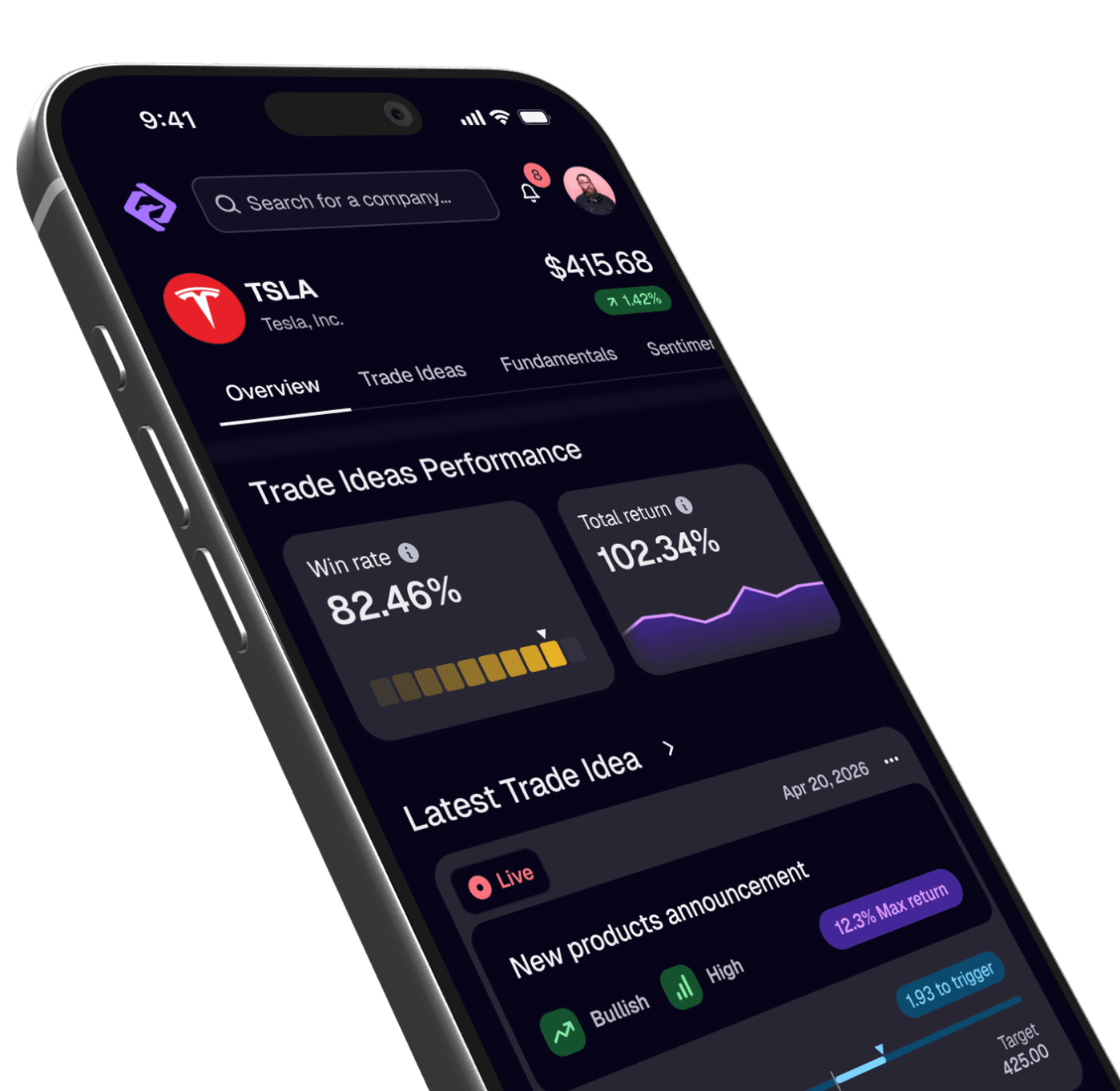
0.25%Trade Ideas Performance
Latest Closed Trade Idea
0.75750
0.25%About
Overview
What Is FIL/USD?
FIL/USD shows the FIL/USD price: how many US dollars are needed to buy one FIL, the native token of Filecoin. If FIL/USD is quoted at a hypothetical 4, one FIL costs 4 US dollars, and converting Filecoin to USD works at the same rate.
Filecoin is a decentralized storage network where storage providers rent out disk space and are paid in FIL for storing data reliably. It was created by Protocol Labs, the team behind the IPFS file-sharing protocol. Traders follow FIL/USD because it is one of the largest projects in decentralized infrastructure, with a token economy built around storage supply and demand.
Key Facts About FIL/USD
- Base currency: Filecoin (FIL)
- Quote currency: US Dollar (USD)
- Asset category: Decentralized storage / infrastructure token
- Blockchain / network: Filecoin's own blockchain
- Consensus mechanism: Storage-based consensus, in which providers prove they are storing data (Proof of Replication and Proof of Spacetime)
- Launch year and founder: Developed by Protocol Labs, founded by Juan Benet; the token sale took place in 2017 and the mainnet launched in October 2020
- Supply model: New FIL is released over many years as block rewards to storage providers, while some fees are burned and FIL is locked as collateral
- Market capitalization tier: Mid-cap
- Trading hours: 24/7
- Liquidity: High, with listings on most major exchanges
- Volatility: High; generally above Bitcoin's
How Filecoin Works
On Filecoin, storage providers commit hard drive capacity to the network and store data for clients. They must regularly prove, using cryptography, that they are still storing the data they promised. These proofs, known as Proof of Replication and Proof of Spacetime, also determine how often providers win block rewards.
Providers must lock FIL as collateral when they add storage capacity, and they can lose part of it if they fail to keep their promises. Clients pay providers for storing their data, and Filecoin is closely linked to IPFS, a widely used system for addressing and sharing files by their content. Because IPFS identifies files by what they contain rather than where they are stored, the same file can be retrieved from any provider that holds it.
Filecoin added smart contracts through the Filecoin Virtual Machine, allowing developers to build applications such as storage markets and lending for providers. Compared with Arweave, which offers one-time payment for permanent storage, Filecoin uses ongoing storage deals; compared with traditional cloud storage, it offers a decentralized alternative.
Filecoin Tokenomics and Supply
FIL was first distributed through a 2017 token sale and allocations to Protocol Labs, the Filecoin Foundation and early contributors, with vesting schedules for insiders. The largest share of supply is reserved for block rewards to storage providers, released over many years.
Several mechanisms remove FIL from circulation. Providers lock FIL as collateral, some network fees are burned, and penalties for failing to store data also burn FIL. Changes in collateral rules affect how much FIL is locked. A governance change known as FIP-81, for example, raised collateral requirements and increased the amount of FIL providers must lock.
FIL is used to pay for storage, for collateral and for network fees. For FIL/USD, the supply model matters because storage providers receive steady rewards that they may sell to cover costs, while collateral and burns reduce liquid supply.
Key Drivers of FIL/USD
Paid Storage Demand
How much data clients actually pay to store, as opposed to capacity committed by providers, shows real demand. This distinction is central to FIL/USD analysis.
Storage Provider Economics
Providers' costs, rewards and collateral requirements determine how much FIL they need to hold or sell.
AI and Data Storage Narratives
Growing data needs from AI and other applications can increase interest in decentralized storage.
Token Unlocks and Emissions
Scheduled releases and block rewards add circulating supply, which traders watch closely.
Altcoin Market Cycles
FIL tends to rally during broad altcoin rallies and fall sharply in downturns.
Typical FIL/USD Volatility and Price Ranges
FIL/USD often moves in the mid single digits in percentage terms on an average day, with weekly ranges commonly between 8% and 20%. After a very high valuation around its 2020 launch and 2021 rally, it spent long periods declining.
Volatility tends to rise around protocol upgrades, changes to collateral rules, AI-related narratives and broad crypto events such as FOMC decisions and US CPI releases. Quieter periods are common when infrastructure tokens are out of favor.
FIL is generally more volatile than Bitcoin and far more volatile than traditional assets.
Best Time to Trade FIL/USD
FIL/USD trades 24/7, including weekends:
- Asian session: often very active, as many storage providers and traders are based in Asia
- European session: volume rises as European traders join
- US session: active, especially during the overlap with US equity market hours
- Session overlaps: the Asia-Europe and Europe-US overlaps bring added liquidity
- Weekends and holidays: thinner liquidity can magnify moves
The Asian session is often the most important time to trade FIL/USD, given the concentration of storage providers and trading interest in the region.
Most Common Strategies for Trading FIL/USD
- Storage-demand tracking: traders follow data on paid storage deals and network capacity as fundamental indicators.
- Provider-selling analysis: monitoring reward flows to exchanges helps traders anticipate selling pressure.
- Infrastructure-theme rotation: traders compare FIL with other infrastructure and AI tokens and rotate toward the strongest.
- Mean reversion after long declines: some traders look for oversold conditions after extended downtrends.
Those who want to buy Filecoin should understand that FIL/USD trading is affected by the economics of storage providers as much as by investor demand.
Factors That Could Move FIL/USD in the Future
- Regulation: rules for data storage, privacy and infrastructure tokens
- Adoption: enterprises, AI developers and archives paying for storage
- Technology: faster data retrieval and smart contract applications
- Competition: traditional cloud providers and other decentralized storage networks
- Monetary policy: liquidity conditions affecting altcoins
- Tokenomics: block rewards, collateral rules and burns
- Security: reliability of storage proofs and providers
No FIL/USD forecast or FIL/USD price prediction is certain; traders follow storage demand and provider economics as they develop.
Advantages and Risks of Trading FIL/USD
Advantages
- Real infrastructure: a large decentralized storage network
- Collateral lockups: providers must hold FIL
- Fee burns: some network fees are destroyed
- High liquidity: widely listed on major exchanges
Risks
- Provider selling: rewards often reach the market
- Demand gap: paid storage can lag committed capacity
- Competition: cloud providers offer mature services
- High volatility: large swings in both directions
FIL/USD Trading FAQ
Q: How do storage providers earn FIL?
A: They earn block rewards based on the storage they prove to the network, plus payments from clients whose data they store.
Q: Why must storage providers lock FIL?
A: Collateral gives providers a financial stake in keeping their promises. They can lose part of it if they fail to store data correctly.
Q: How is Filecoin related to IPFS?
A: Both were created by Protocol Labs. IPFS is a system for addressing and sharing files, while Filecoin adds paid, verifiable storage.
Q: When did Filecoin's mainnet launch?
A: Filecoin's mainnet launched in October 2020, after a token sale in 2017.
Q: What is Proof of Spacetime?
A: It is a recurring cryptographic proof that a storage provider has continued to store a client's data over time, not just at the moment it was received.
FAQ
Related Assets
Price action provided by Massive. Fundamentals, news and corporate events provided by FactSet. NLP support provided by Perplexity & Gemini. All data is provided for informational purposes only.
Make every trade make sense.
Sign up free. No card required. Three trade ideas a day, the AI analyst, the community - on us.

Join us and trade with people
who think like you.
The Edge Hound Discord is where serious self-directed investors talk strategy, share setups, and learn from each other. Free to join with any plan - including Free.
Free to join with any plan - including Free.