
LINKUSD
Chainlink - US dollar
10.2760
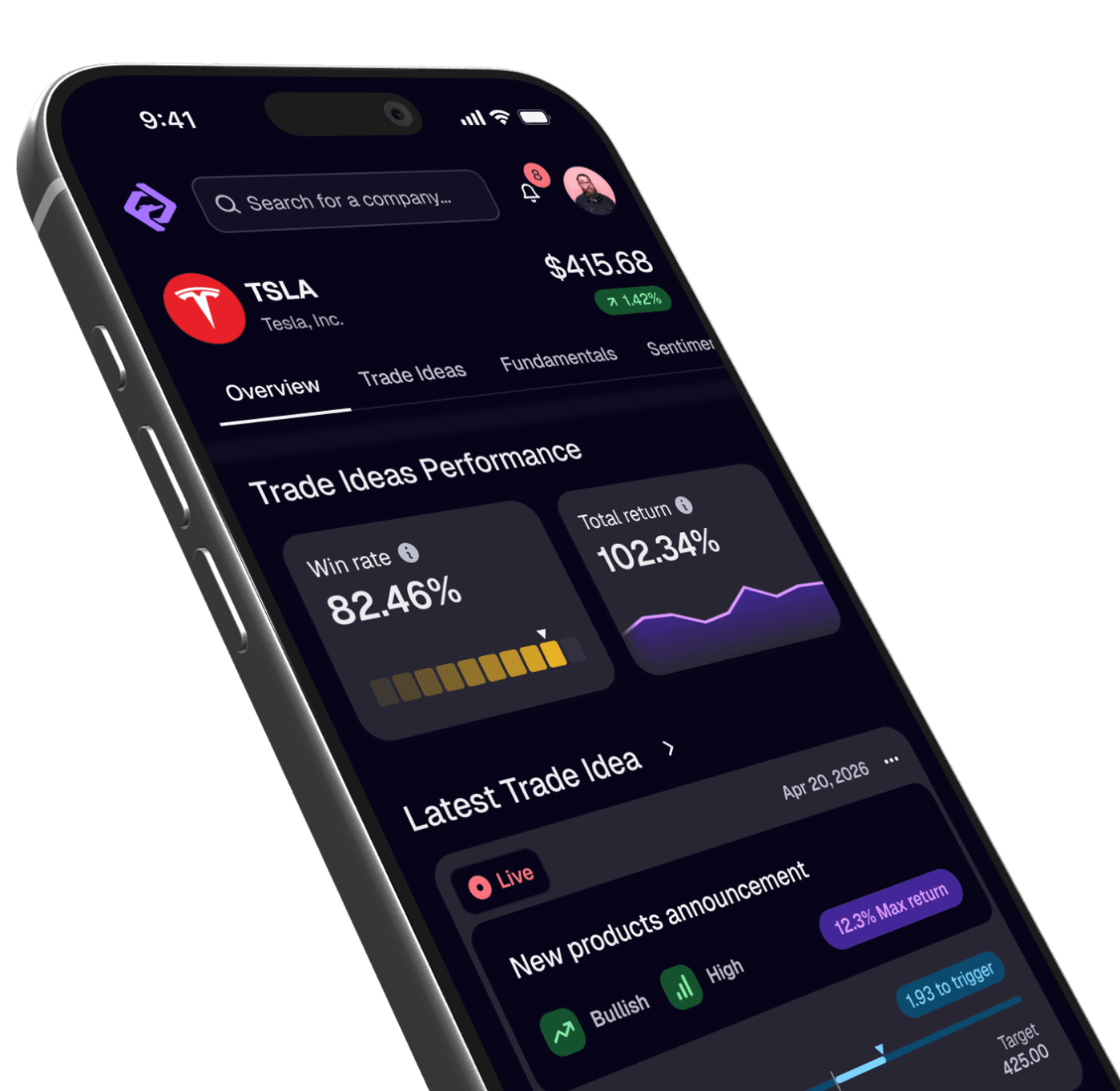
0.06%Trade Ideas Performance
Latest Closed Trade Idea
10.2760
0.06%About
Overview
What Is LINK/USD?
LINK/USD shows the LINK/USD price: how many US dollars are needed to buy one LINK, the token of Chainlink. If LINK/USD trades at a hypothetical 15, one LINK costs 15 US dollars, and converting Chainlink to USD works at the same rate.
Chainlink is the leading oracle network: it delivers real-world data, such as asset prices, to blockchains and connects different blockchains with each other. Many DeFi protocols rely on Chainlink price feeds to run loans and liquidations. Traders follow LINK/USD because Chainlink sits underneath much of decentralized finance and is increasingly used by banks and financial institutions exploring tokenization.
Key Facts About LINK/USD
- Base currency: Chainlink (LINK)
- Quote currency: US Dollar (USD)
- Asset category: Oracle / blockchain infrastructure
- Blockchain / network: LINK is issued as a token on Ethereum; Chainlink services run on many blockchains
- Consensus mechanism: Not applicable; LINK relies on Ethereum's Proof of Stake, while Chainlink's oracle networks reach agreement among independent node operators
- Launch year and founders: Co-founded by Sergey Nazarov and Steve Ellis; the LINK token sale took place in 2017 and the mainnet launched in 2019
- Supply model: Fixed total supply of 1 billion LINK, with no mining or inflation
- Market capitalization tier: Large-cap
- Trading hours: 24/7
- Liquidity: High, with listings on almost all major exchanges
- Volatility: High; generally above Bitcoin and Ethereum
How Chainlink Works
Blockchains cannot access information outside their own network on their own. Chainlink solves this with decentralized oracle networks: groups of independent node operators that collect data from multiple sources, agree on a result and publish it on-chain. Because each node reports its own value and the network combines them, a single faulty or dishonest node cannot easily distort the result. A lending protocol, for example, uses Chainlink price feeds to decide when a borrower's collateral should be liquidated.
Chainlink has expanded beyond price data. Its Cross-Chain Interoperability Protocol (CCIP), launched on mainnet in July 2023, lets tokens and messages move between blockchains. Other services include Proof of Reserve, which checks the backing of tokenized assets, and data feeds designed for fast trading applications.
Node operators are paid for their services, and some stake LINK as a guarantee of good behavior. Chainlink has also run experiments with SWIFT and banks on connecting traditional financial systems to blockchains. Compared with newer oracle networks such as Pyth, Chainlink has a longer track record and wider adoption across DeFi.
Chainlink Tokenomics and Supply
LINK has a fixed total supply of 1 billion tokens, all created at launch. Part was sold in the 2017 token sale, part went to node operator incentives and ecosystem growth, and part to the company. Tokens held by the project are released over time, adding to circulating supply.
LINK is used to pay node operators and to stake. Chainlink Staking, upgraded to version 0.2 in late 2023, lets community members and node operators lock LINK to help secure oracle services in exchange for rewards.
In 2025, Chainlink launched the Chainlink Reserve, which uses revenue from its services to buy LINK and hold it. For LINK/USD, the supply model matters because releases from project-held tokens add supply, while the Reserve and staking remove LINK from active circulation, linking the token more closely to Chainlink's commercial success.
Key Drivers of LINK/USD
DeFi Activity and Value Secured
The more value that depends on Chainlink feeds, the more important the network becomes. Growth in DeFi lending and derivatives is a core input to LINK/USD analysis.
Institutional Tokenization
Banks and asset managers testing tokenized funds and settlement often use Chainlink for data and cross-chain connections. Production deals can strengthen LINK's long-term case.
CCIP Adoption
Wider use of CCIP for moving tokens and data between chains expands Chainlink's revenue beyond price feeds.
Chainlink Reserve Purchases
Revenue-funded purchases for the Reserve create steady demand, and their size shows how much the business is earning.
Supply Releases
Transfers of project-held LINK to exchanges or partners are tracked closely, as they can add selling pressure.
Typical LINK/USD Volatility and Price Ranges
LINK/USD often moves in the mid single digits in percentage terms on an average day, with weekly ranges commonly between 8% and 20%. It tends to move with the wider DeFi sector but can react independently to institutional news.
Volatility tends to rise around major partnership announcements, DeFi liquidation events, large token transfers and broad crypto events such as FOMC decisions and US CPI releases. Quieter periods are common when DeFi activity is subdued and there is little institutional news.
LINK is generally more volatile than Bitcoin and Ethereum and far more volatile than traditional assets.
Best Time to Trade LINK/USD
LINK/USD trades 24/7, including weekends:
- Asian session: steady activity on Asian exchanges
- European session: volume increases, often with news from European banks and financial institutions
- US session: usually the busiest, as US macro data, institutional news and the overlap with US equity market hours drive activity
- Session overlaps: the Europe-US overlap typically offers the deepest liquidity
- Weekends and holidays: thinner liquidity can magnify moves
The US session is generally the best time to trade LINK/USD, when institutional announcements and market liquidity tend to peak.
Most Common Strategies for Trading LINK/USD
- Institutional-news positioning: traders follow tokenization pilots and bank partnerships, which can drive LINK's larger moves.
- Staking for rewards: long-term holders stake LINK when pool space is available to earn rewards while holding.
- Reserve and wallet tracking: traders watch Chainlink Reserve purchases and transfers of project-held LINK to judge net supply.
- DeFi-sector correlation trading: because LINK supports DeFi, traders use it as a way to express a view on the whole sector.
Those who want to buy Chainlink for the long term often focus on adoption, while active LINK/USD trading follows DeFi and institutional news.
Factors That Could Move LINK/USD in the Future
- Regulation: rules for tokenized assets and DeFi that affect demand for oracle services
- Institutional adoption: banks and asset managers moving tokenization into production
- Technology: growth of CCIP and new data services
- Competition: other oracle and interoperability networks
- Monetary policy: liquidity conditions affecting DeFi activity
- Tokenomics: Reserve purchases, staking and project-held token releases
- Security: oracle failures or exploits in protocols using Chainlink
No LINK/USD forecast or LINK/USD price prediction is certain; traders weigh adoption, revenue and supply as they evolve.
Advantages and Risks of Trading LINK/USD
Advantages
- Market leader: the most widely used oracle network
- Fixed supply: capped at 1 billion LINK
- Revenue link: the Chainlink Reserve buys LINK with service revenue
- Institutional reach: involved in bank tokenization projects
Risks
- Project-held supply: releases can add selling pressure
- Competition: newer oracle networks target the same users
- Adoption lag: institutional use can take years
- DeFi dependence: weak DeFi activity reduces demand
LINK/USD Trading FAQ
Q: What is a blockchain oracle?
A: An oracle brings outside information, such as asset prices or interest rates, onto a blockchain so smart contracts can use it.
Q: What is CCIP?
A: The Cross-Chain Interoperability Protocol is Chainlink's service for moving tokens and messages between different blockchains.
Q: What is the Chainlink Reserve?
A: Launched in 2025, it uses revenue from Chainlink's services to buy LINK on the market and hold it.
Q: Can LINK be staked?
A: Yes. Chainlink Staking lets holders lock LINK in a staking pool, when space is available, to help secure oracle services and earn rewards.
Q: Who founded Chainlink?
A: Chainlink was co-founded by Sergey Nazarov and Steve Ellis. The LINK token sale took place in 2017, and the network launched on mainnet in 2019.
FAQ
Related Assets
Price action provided by Massive. Fundamentals, news and corporate events provided by FactSet. NLP support provided by Perplexity & Gemini. All data is provided for informational purposes only.
Make every trade make sense.
Sign up free. No card required. Three trade ideas a day, the AI analyst, the community - on us.

Join us and trade with people
who think like you.
The Edge Hound Discord is where serious self-directed investors talk strategy, share setups, and learn from each other. Free to join with any plan - including Free.
Free to join with any plan - including Free.