
SOLUSD
Solana - US dollar
82.690
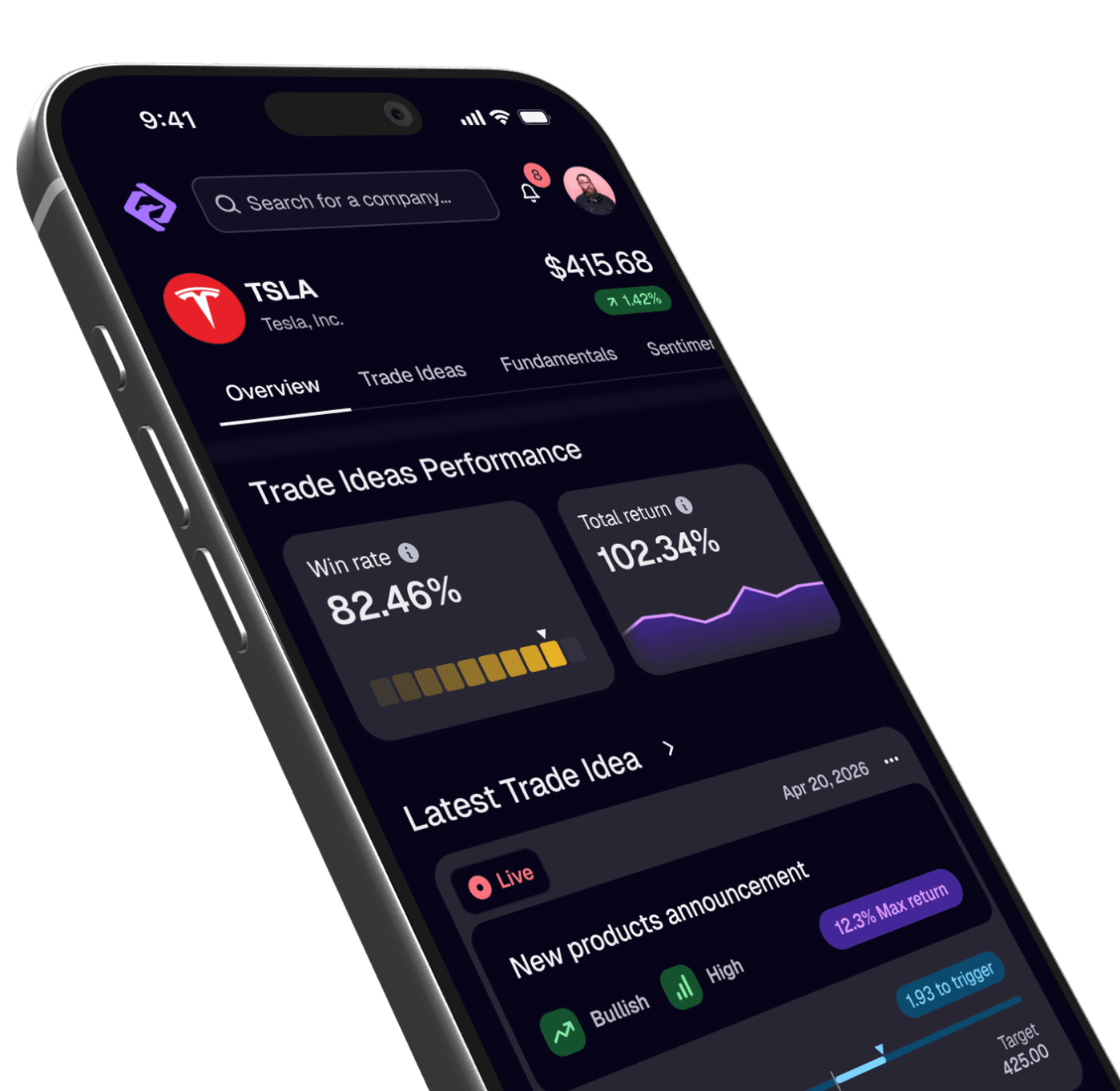
0.66%Trade Ideas Performance
Latest Closed Trade Idea
82.690
0.66%About
Overview
What Is SOL/USD?
SOL/USD shows the SOL/USD price: how many US dollars are needed to buy one SOL, the native token of Solana. If SOL/USD trades at a hypothetical 150, one SOL costs 150 US dollars, and converting Solana to USD works at the same rate.
Solana is a high-performance smart contract platform (Layer 1) built to process large numbers of transactions quickly and cheaply on a single chain. Traders follow SOL/USD because Solana has become one of the busiest blockchains for trading, payments and consumer apps, and because SOL reacts strongly to shifts in on-chain activity.
Key Facts About SOL/USD
- Base currency: Solana (SOL)
- Quote currency: US Dollar (USD)
- Asset category: Smart contract platform (Layer 1)
- Blockchain / network: Solana's own blockchain
- Consensus mechanism: Proof of Stake, combined with Proof of History, a timekeeping technique that orders transactions
- Launch year and founders: Described by Anatoly Yakovenko in a 2017 white paper; mainnet beta launched in 2020, developed by Solana Labs and supported by the Solana Foundation
- Supply model: No fixed maximum supply; inflation that declines each year toward a long-term rate, with half of each base transaction fee burned
- Market capitalization tier: Large-cap
- Trading hours: 24/7
- Liquidity: Very high on centralized exchanges and on Solana's own decentralized exchanges
- Volatility: High; generally above Bitcoin and Ethereum
How Solana Works
Solana's key idea is Proof of History, a cryptographic clock that timestamps transactions so validators can agree on their order without constant messaging. Combined with Proof of Stake, it allows very short block times and low fees, typically a fraction of a cent per transaction.
Validators stake SOL, and holders can delegate their SOL to validators to earn a share of rewards. Unlike Ethereum, which spreads activity across Layer 2 networks, Solana keeps everything on one fast chain, so all apps share the same liquidity and users do not need to bridge between networks.
This design has attracted decentralized exchanges and aggregators such as Jupiter and Raydium, payment services, NFT markets and meme-coin launch platforms. The trade-off is that running a validator requires powerful hardware. Solana also suffered several network outages in 2021 and 2022, and developers have since worked on reliability, including an independent validator client called Firedancer, built by Jump Crypto.
Solana Tokenomics and Supply
A large share of SOL was allocated at launch to early investors, the team and the foundation. New SOL is created as staking rewards under an inflation schedule that began at 8% per year and falls by 15% each year until it reaches a long-term rate of 1.5%.
There is no maximum supply. Half of each transaction's base fee is burned, which partly offsets issuance, but at normal activity levels the supply still grows. Most SOL is staked, which keeps a large share of supply out of active trading.
SOL is used to pay transaction fees, to stake and secure the network, and as a base trading asset in Solana's DeFi markets. For SOL/USD, the supply model matters because ongoing inflation must be absorbed by demand, while staking rewards give holders a reason to keep SOL locked rather than sell it.
Key Drivers of SOL/USD
On-Chain Trading Activity
Solana's decentralized exchange volumes are among the highest in crypto. Waves of activity, often led by meme-coin trading, increase demand for SOL as the main trading pair and fee token, making DEX volume central to SOL/USD analysis.
Network Reliability
Past outages damaged confidence. Long periods of stable uptime and new validator clients support the case for Solana, while any new disruption could quickly weigh on the price.
Institutional Products
Exchange-traded products tracking SOL, including US funds launched in 2025 that stake their holdings, give traditional investors access and add a new source of demand.
Competition With Ethereum
Solana competes directly with Ethereum and its Layer 2s for developers, users and stablecoin activity. Shifts in market share between them are reflected in the SOL/ETH ratio.
Lessons From the FTX Collapse
When the FTX exchange failed in 2022, SOL fell especially hard because FTX and its related firm Alameda Research were large holders and supporters. The episode showed how concentrated ownership and ecosystem ties can affect SOL.
Typical SOL/USD Volatility and Price Ranges
SOL/USD often moves in the mid single digits in percentage terms on an average day, with weekly ranges commonly between 10% and 25%. It has historically risen faster than Bitcoin and Ethereum in bull markets and fallen further in downturns.
Volatility rises during meme-coin booms, network incidents, major upgrades, investment product news and broad crypto events such as FOMC decisions and US CPI releases. Quieter phases tend to follow periods of declining on-chain activity.
SOL is generally more volatile than Bitcoin and Ethereum and far more volatile than traditional assets.
Best Time to Trade SOL/USD
SOL/USD trades 24/7, including weekends:
- Asian session: active, with strong derivatives and on-chain trading
- European session: volume rises as European traders join
- US session: usually the busiest, with US investment product flows and the overlap with US equity market hours
- Session overlaps: the Europe-US overlap typically offers the deepest liquidity
- Weekends and holidays: on-chain trading often stays busy, but centralized order books thin out
The US session is generally the best time to trade SOL/USD, since liquidity, macro news and institutional flows peak in those hours.
Most Common Strategies for Trading SOL/USD
- Momentum trading: SOL tends to make strong, sustained moves during periods of rising on-chain activity, which suits momentum-based entries.
- SOL/ETH relative value: traders compare SOL with Ether to judge which smart contract platform is gaining market share.
- Staking while holding: long-term holders stake or use liquid staking tokens to offset inflation while keeping exposure.
- DEX volume tracking: traders watch Solana's on-chain trading volume and fees as an early signal of growing or fading demand.
Those who want to buy Solana for the long term often stake it, while active SOL/USD trading follows on-chain activity and market momentum.
Factors That Could Move SOL/USD in the Future
- Regulation: treatment of staking, meme-coin platforms and investment products
- Adoption: payments, stablecoin use and consumer apps built on Solana
- Technology: new validator clients and upgrades aimed at speed and reliability
- Competition: Ethereum Layer 2s and other fast chains such as Sui and Aptos
- Monetary policy: liquidity conditions that drive demand for high-beta crypto assets
- Tokenomics: declining inflation and changes to how fees are burned or distributed
- Security: outages, exploits or failures of major ecosystem players
No SOL/USD forecast or SOL/USD price prediction is certain; traders follow network usage, reliability and liquidity as they evolve.
Advantages and Risks of Trading SOL/USD
Advantages
- Fast and cheap: low fees and quick confirmations
- Active ecosystem: one of the busiest chains for trading and apps
- Staking rewards: holders can earn yield
- High liquidity: deep centralized and on-chain markets
Risks
- Ongoing inflation: no maximum supply
- Outage history: past disruptions raise reliability concerns
- Speculation-driven activity: volumes can fall when meme-coin trading cools
- Hardware demands: validator costs limit decentralization
SOL/USD Trading FAQ
Q: What is Proof of History?
A: It is a cryptographic timekeeping method that proves the order in which transactions happened, helping Solana's validators agree quickly without lengthy communication.
Q: Does SOL have a maximum supply?
A: No. New SOL is issued as staking rewards under a declining inflation schedule, while half of each base transaction fee is burned.
Q: Why did SOL fall so sharply in 2022?
A: The collapse of the FTX exchange hit SOL hard because FTX and Alameda Research were major holders and supporters of the Solana ecosystem.
Q: How is Solana different from Ethereum?
A: Solana runs all activity on one fast chain with low fees, while Ethereum keeps its main chain more decentralized and relies on Layer 2 networks to scale.
FAQ
Related Assets
Price action provided by Massive. Fundamentals, news and corporate events provided by FactSet. NLP support provided by Perplexity & Gemini. All data is provided for informational purposes only.
Make every trade make sense.
Sign up free. No card required. Three trade ideas a day, the AI analyst, the community - on us.

Join us and trade with people
who think like you.
The Edge Hound Discord is where serious self-directed investors talk strategy, share setups, and learn from each other. Free to join with any plan - including Free.
Free to join with any plan - including Free.